
Value People. Foster Relationships.
Relationships & Partnerships
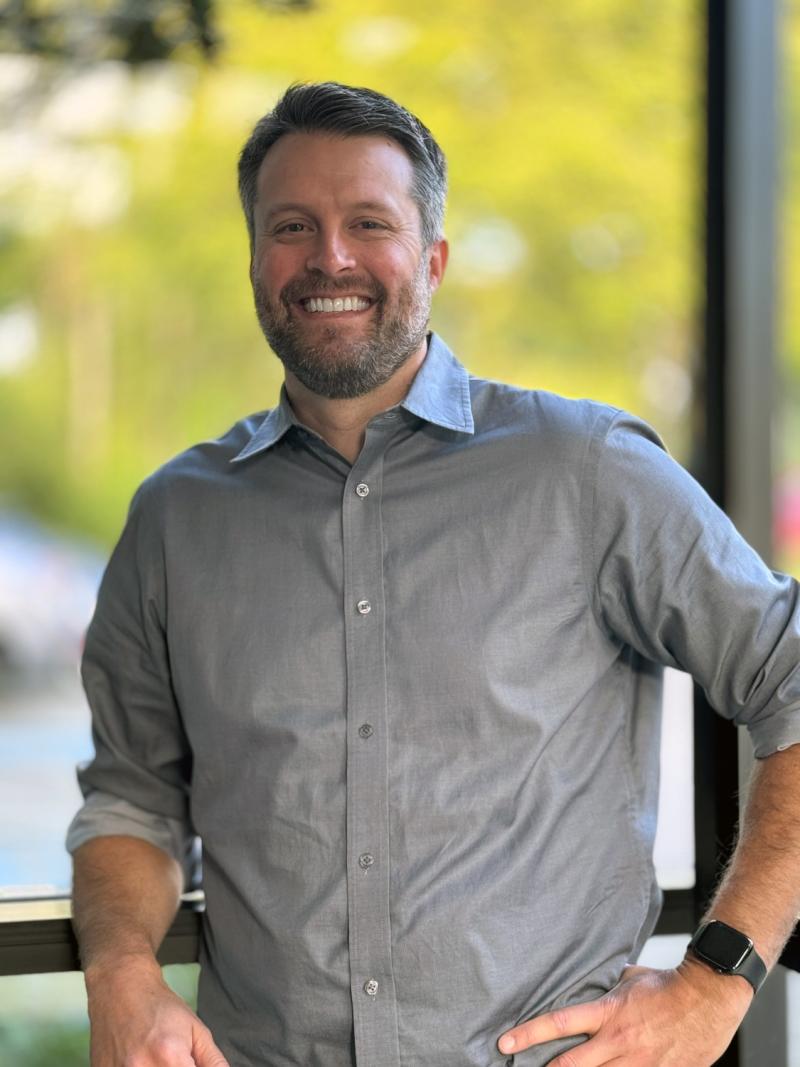
In this edition of our Building Bones series, I sat down with one of Miller Consulting Engineers' principals to discuss the art of building and maintaining strong client relationships. As the cornerstone of Miller's industry reputation, relationships and referrals play a pivotal role in our success. Our principal shares his journey from his early engineering days to leading project teams, offering insights for growing a strong client base. Discover practical strategies for fostering lasting relationships, communicating effectively, and building a strong network that stands the test of time.
HOW MANY YEARS HAVE YOU BEEN IN ENGINEERING?
23 years, 21 years with MCE. I've been a principal for 15 years.
WHAT IS MILLER'S REPUTATION IN THE INDUSTRY?
Relationships and referrals are one of the key ways we know our team is serving clients well. Based on comments we hear from people who are referred to us, our team is known for being highly responsive and for prioritizing our clients' end-goals rather than the easy solutions.
DID YOU ALWAYS WANT TO BE AN ENGINEER?
Influenced by my childhood on a farm in Albany, Oregon, and my grandfather, who was a home builder, I always wanted to be a builder. The farm life shaped my ability to visualize and construct real-time solutions. In college, I chose engineering and completed an internship with a large general contracting firm on an expansion project at the Portland Airport. Although I enjoyed construction, that career path didn’t entirely align with what I was looking for. (Contractors often aren’t involved in the design aspects of their projects, which I knew I would miss. Plus the potential for a lot of travel depending on where job sites are located was not appealing.) So, I completed my civil engineering degree and pursued structural engineering as my profession.
WHAT ASPECTS OF STRUCTURAL ENGINEERING INITIALLY ATTRACTED YOU TO THE FIELD?
I love the process of drawing something and then seeing it become a reality. That’s what I really enjoy. The process from idea to built.
DOES YOUR ACTUAL EXPERIENCE DIFFER FROM YOUR ORIGINAL VISION?
My early experience as an engineer aligned with my expectations. For about 10 years, I had the opportunity to really focus and do challenging design work, growing in knowledge and skill. What I wasn’t anticipating was the transition into management and how that would change my daily responsibilities. I no longer get to do much of the intricate engineering work myself, but instead, I guide others in their designs. It’s a different role, and it seems to have come upon me very quickly.
WHAT DO YOU FIND CHALLENGING AS A MANAGER?
One of the biggest challenges is matching projects to the right person at the appropriate time in their engineering journey. This involves understanding and awareness of what each designer/engineer knows, their strengths, and where they need additional guidance.
Another challenge is accepting that engineers have different approaches to solutions. This was a particular struggle area for me when I first started checking projects. There are different solutions to every problem, and having engineers or designers rework their solutions can often disrupt the project timeline and bog down the whole process. Even though someone might not have my solution, that’s perfectly acceptable as long as it is reasonable and viable. I’ve learned that conversation is key. Encouraging staff to present their “why” for their design helps mitigate frustration and lengthy redo's. And, it provides opportunity for staff to articulate in ways that allow for productive learning.

DO YOU HAVE A DREAM PROJECT?
A high rise building is definitely one of my goals. Seeing something of that scale go from concept to reality would be incredible. You do all this math. You envision the physics of the structure; how it works. And, then you get to see it actually stand up. Taking a massive structure from pencil and paper to something people can inhabit and enjoy would be really fun.
WHAT INSIGHTS DO YOU HAVE FOR NEWER ENGINEERS AS THEY BEGIN TO DEVELOP THEIR CLIENT BASE?
It’s funny. You wouldn’t think that relationships would matter so much in engineering. But, as in most fields, relationships are key to being successful. My client base grew through key connections, like a family friend at Lewis & Clark College, which led to meeting architects. Lots of architects. Much can be said about the value of “who you know” being a big factor in successful networking. However, getting your foot into one door doesn’t necessarily mean that more doors will open to you. Building relationships is crucial, AND it’s equally important to do great work and be enjoyable to work with. Be fun. Be responsive and communicative. On every project, work to build trust with the client. And, if you do happen to make a mistake, own it and work hard to come up with a solution. Quality relationships lead to repeat business and referrals.
Here are a few takeaways I’ve learned to help facilitate these relationships:
- “OVER” COMMUNICATE. If you have any sort of project question, talk to the client about it. Don‘t guess. Have that conversation. Good, effective communication is such an important part of success. It helps make sure everyone is on the same page.
- PHONE INSTEAD OF EMAIL. Make the effort to pick up the phone and talk to someone, rather than trying to communicate over email. Email is great, and definitely has its purpose, but it can’t compete with the personal touch of a phone call. That gets back to building that relationship. Actually speaking with people builds the relationship faster than through an email exchange.
- BE FLEXIBLE. Design is a constantly shifting, changing process. It's not a straight line from start to finish. It’s often easy for staff to get frustrated when things change with the project causing back tracking and redesign. View this as part of the design process, necessary to make the design better. Help the change happen. In the end, our product will be better and you’ll have probably grown as a designer through the experience.

IS THERE A PARTICULAR PROJECT THAT STANDS OUT AS ESPECIALLY REWARDING OR EXCITING?
The Daimler parking structure stands out. It’s a five-level, 330,000 square-foot structure with 1,245 parking spaces. The design challenges, including dealing with the floodplain, seismic risks, and creating column-free parking spaces, made it a particularly interesting project.
WHAT DO YOU DO FOR FUN OUTSIDE OF WORK?
Nature & Sports
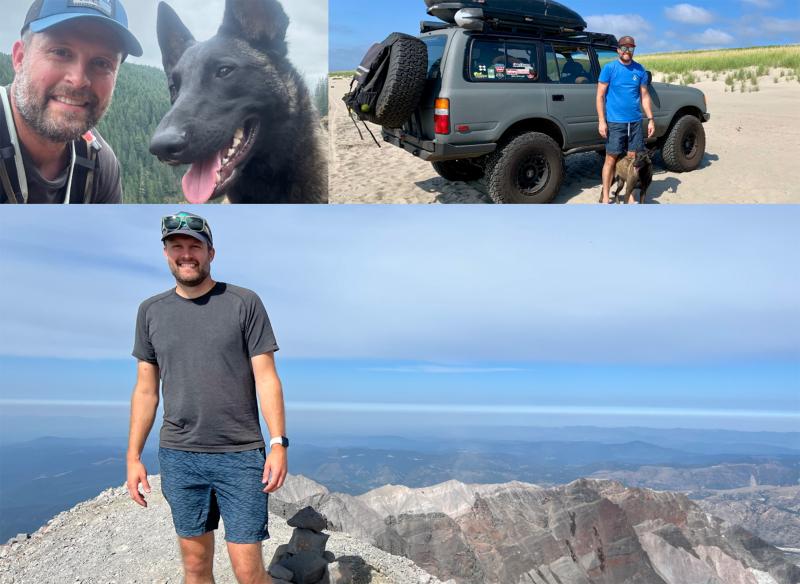
It feels like there is a lot of constant "noise" during the workweek so being able to have some solitude in nature is a good way for me to recharge. Heading out into the middle of nowhere and camping or finding the limits of what my truck can do on an off-road trail has been really enjoyable for the last few years. (I restored an old, neglected Toyota Land Cruiser and now, it’s a fun, reliable off-road vehicle. I’m still always working on it, which is a large part of the enjoyment.)
I consider myself pretty competitive and enjoy just about all sports. Right now I am into pickleball and trail running. Running has always been a hobby of mine. It provides alone time to decompress. It’s peaceful and relaxing running with Mila (my dog) through the woods near my house.
Marathons and tennis were significant hobbies of mine for a while, but I’m on a little break from them currently. I’m sure I’ll get back to them at some point. I would still like to do another ultra marathon, but that’s going to take more time and a dog that wants to run that far during training.
Topics
Building Construction, Building Design, Computer Aided Design, Construction Services, Engineering Services
Related Expertise
Photos
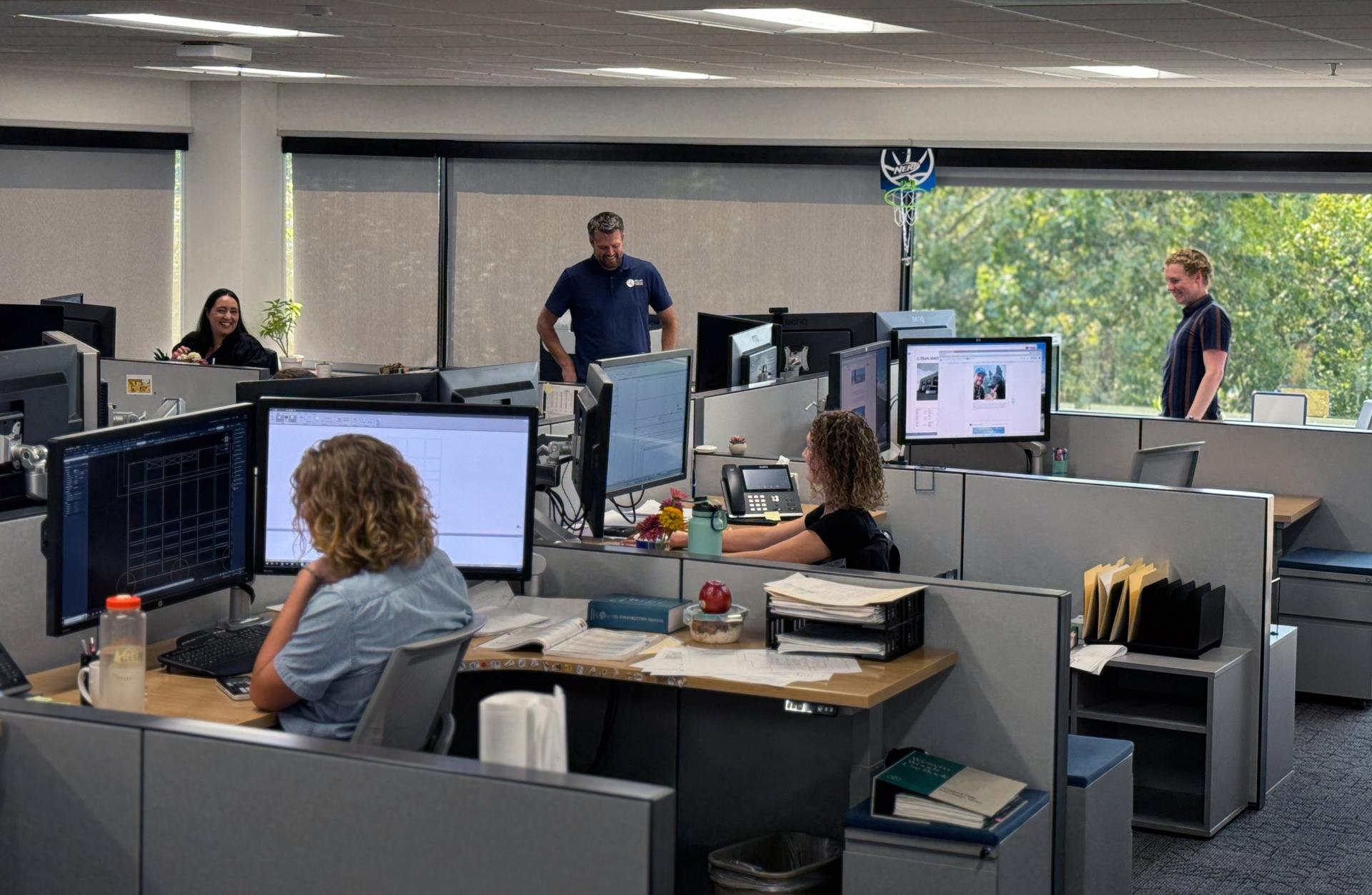
Andrew with Team