
Engineering the Adventure in Downtown Spokane
A discussion about adventure course engineering
- Project: Spokane Skyline Zipline
- Location: Spokane, WA
- Year: 2026
- Architect: Synergo
- Team: Kevin McCormick, Steven Domiter
Adventure structures occupy a unique space in structural engineering. They’re not quite buildings, not quite infrastructure—but they demand the same rigor, while introducing a completely different set of forces, user experiences, and environmental constraints.
The downtown Spokane zipline is a perfect example.
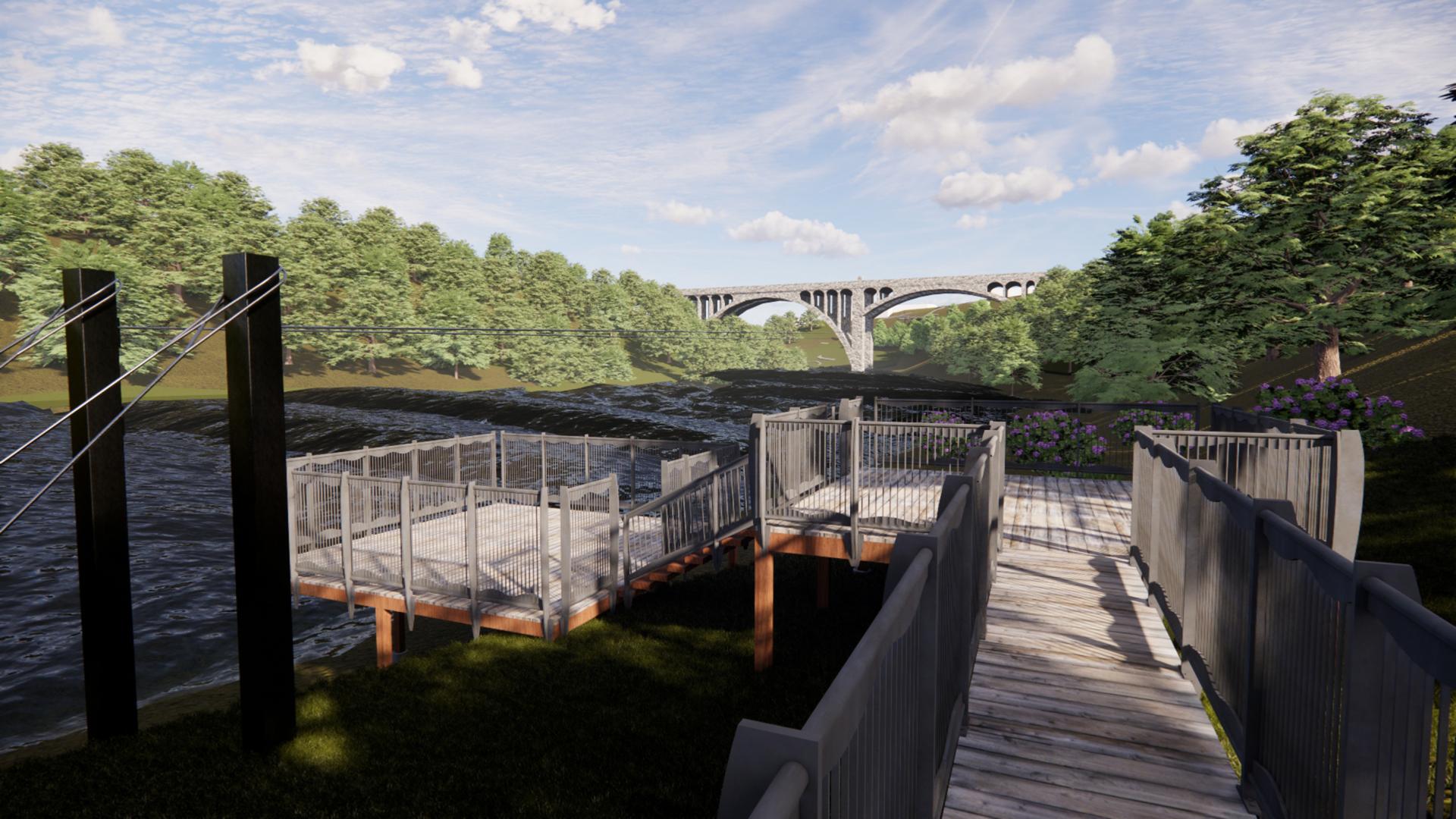
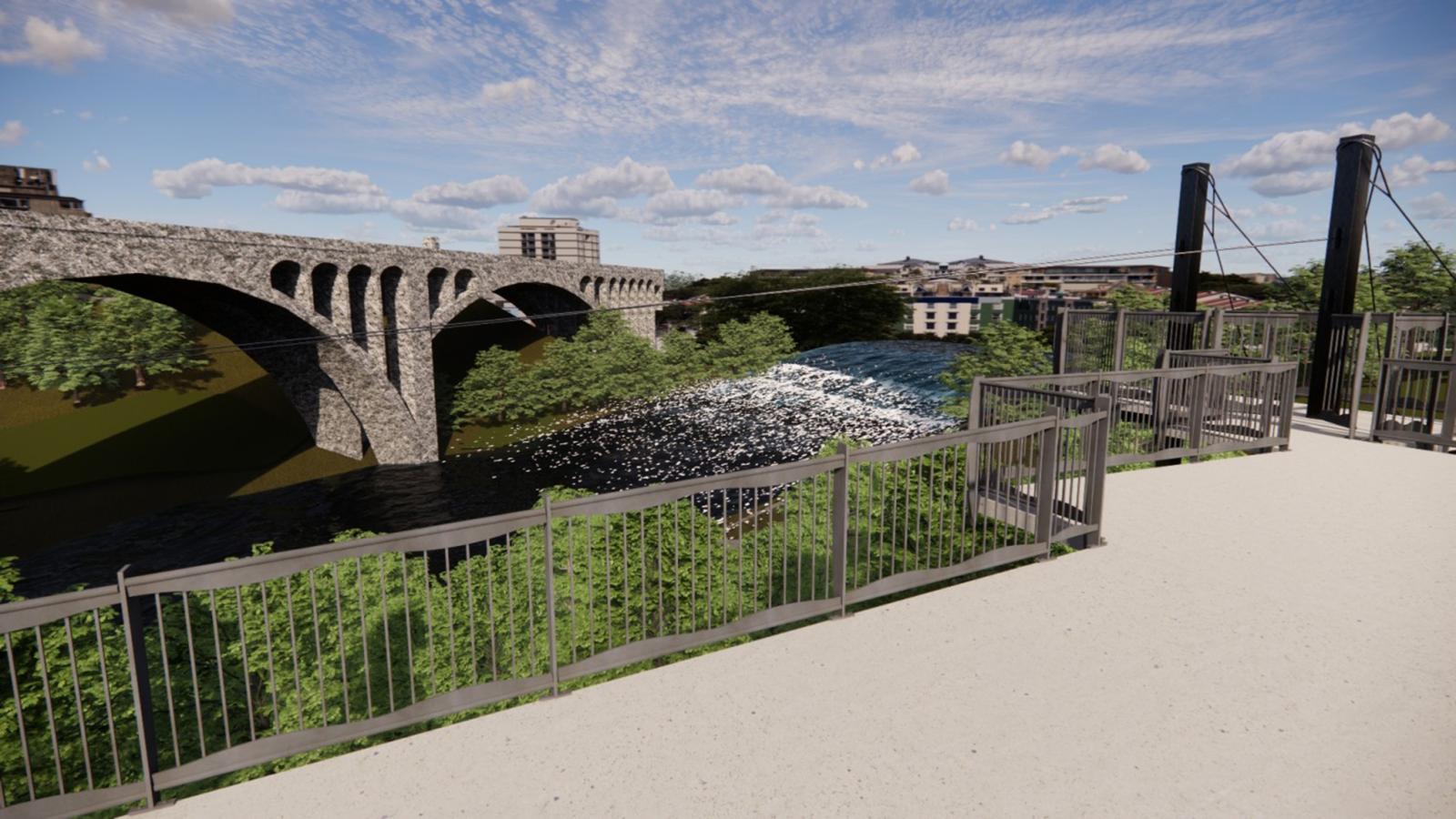
Extending approximately 1,400 feet through downtown Spokane and passing beneath the Monroe Street Bridge, this project brings an aerial experience directly into an urban setting. While the concept may feel light and recreational, the engineering behind it is anything but.

Designing Within Constraints
From the outset, the defining feature of this project was also its greatest constraint: the zipline’s path beneath an existing bridge.
Clearance, alignment, and constructability all had to be carefully coordinated. Even small deviations in the line’s position could introduce conflicts with the bridge structure above. To address this, the design intentionally allows for flexibility during installation—giving contractors the ability to fine-tune the final alignment while maintaining structural integrity and safety.
This kind of adaptability is a hallmark of adventure course design. Unlike traditional buildings, where geometry is largely fixed, these systems often require a degree of tolerance to account for field conditions, cable behavior, and user dynamics. Temperature and wind can also change the geometry of the cable, and affect how the ride feels, so the design needs to account for weather conditions, as well.
A Study in Load Paths
At its core, a zipline is a study in tension.
But the forces at play are more complex than they first appear. In addition to the primary cable tension, engineers must account for dynamic loading from riders, environmental forces such as wind, and less frequent—but critical—emergency scenarios. Understanding how these forces resolve into the structure is essential. At the launch platform in Spokane, that meant designing a system that could transfer loads efficiently into a single supporting column. Guy wires are used to support the zipline column, with stability of the platform provided by an existing plaza walkway and added braces to the column.
One consideration that emerged was during the evaluation of the proposed guy wire connection to an existing concrete wall. Analysis showed that the wall would be overstressed under anticipated loads. Our solution was to introduce a new concrete deadman anchor—an independent anchorage system designed specifically to resist those forces and provide long-term reliability. These moments—where analysis reveals a mismatch between assumption and reality—are where engineering judgment plays its most important role.

Building on What Exists
The launch platform for the zipline extends from an existing plaza at street level. Integrating new structural elements into existing construction is always a careful exercise in restraint. In this case, that meant taking cues from what was already there—down to the guardrails—verifying existing conditions so the new system would feel like a natural extension.
Additionally, our launch platform design avoids adding reinforcing to the existing deck, instead relying on a self-supported configuration for gravity loads. The existing structure is engaged strategically, providing lateral support while the new platform carries its own weight. By minimizing impact to the original structure, the solution reduces risk, simplifies construction, and respects the integrity of what’s already in place.
This approach reflects a broader principle in structural engineering: understanding where to rely on existing systems—and where to stand independently—can lead to the most efficient and resilient solution.
Below the Surface
As with many projects, some of the most complex challenges are hidden below grade.
Both the launch and landing sites for the zipline presented difficult soil conditions, compounded by steep terrain at the launch location. These factors made shallow foundations impractical, leading to the use of deep foundations - in this case helical piles or micropiles.
At the landing, the presence of an existing walking trail introduced another layer of complexity. An initial concept involving a buried concrete deadman had to be abandoned to avoid disrupting the trail. In its place, the design evolved into a large, self-contained mat foundation capable of supporting both the landing column and the associated guy wire forces.
These kinds of adjustments are common in adventure projects, where site sensitivity—whether environmental, recreational, or cultural—often drives structural decisions as much as the loads themselves.

Engineering for Experience
What makes adventure structures unique is that they are designed not just to stand—but to be active and to move with purpose.
Every ride down a zipline introduces movement, acceleration, and variation. The structure must not only resist these forces but do so in a way that feels safe and seamless to the user.
This requires careful consideration of stiffness, deflection, and redundancy. It also means designing for a range of scenarios—from a single rider to a fully loaded condition, and from everyday use to emergency events.
In Spokane, structural modeling was used to evaluate a range of load combinations and ensure the system performs reliably across all anticipated conditions.
A Broader Body of Work
While each project is unique, the Spokane zipline builds on our team's broader body of experience in aerial adventure design.
Our work in this space spans a wide range of environments—from dense urban settings to remote natural landscapes. Projects have included zipline installations at Oahu Zipline Park and Kualoa Ranch in Hawaii, forest canopy experiences in both Eureka and Felton, California, and challenge courses such as the Lanai Adventure Tower, Hawaii, and Mt. Hermon Adventures, California.
Closer to home, we’ve supported installations like the South Bellevue Zipline and YMCA Camp at Lake Helena, both in Washington, as well as more unconventional projects like the temporary stadium ziplines for college football games—where the mascot takes flight over a packed crowd.
Each project presents its own set of constraints, but the underlying principles remain the same: understand the forces, respect the site, and design systems that are both resilient and adaptable.

More Than Recreation
At first glance, a zipline may seem like a simple form of entertainment. But behind the scenes, it represents a complex integration of structural systems, environmental considerations, and user experience.
Projects like the downtown Spokane zipline highlight the role of engineering in creating not just buildings, but moments—experiences that connect people to place in new and memorable ways.
And for engineers, they offer something equally valuable: the opportunity to think differently about structure, and to apply core principles in ways that are anything but ordinary.
Topics
Adventure Courses, Anchorage, Concrete Design, Decks, Engineering Services, Equipment Anchorage, Foundation, New Construction, Seismic Engineer, Structural Design, Structural Engineer
Printable edition